The Stormy Gulf Stream — chapter 42 of Jules Verne's Twenty Thousand Leagues Under the Sea, told in clear English for language learners.
- Episode
- 42 / 27
- Level
- B1–B2
- Length
- 00
Listen and read
Transcript
The Stormy Gulf Stream
The current word is highlighted as you listen. Click any word to jump there.
Chapter Forty-Two — The Stormy Gulf Stream
None of us will ever forget that terrible day, the 20th of April. I wrote it down while my hands were still shaking. Later I read it to Conseil and Ned Land. They said every fact was true, but words could not show the full horror.
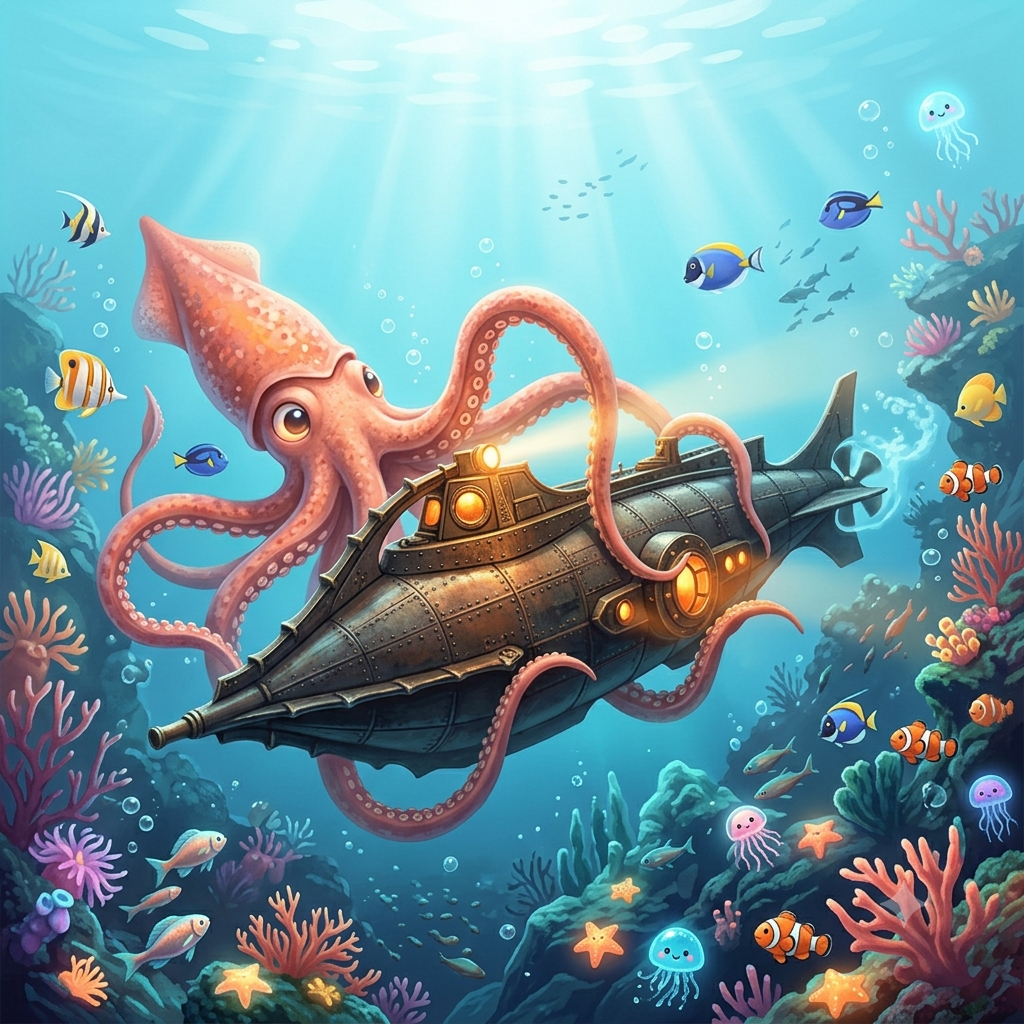
Captain Nemo cried as he watched the sea. He had lost a second friend since we came aboard, and what an awful death! The poor man had been crushed by the giant squid.
One thing from the fight stayed in my mind. As the monster held him, the dying sailor had cried out for help — in French. That cry told me something surprising. I had a fellow countryman on board the Nautilus! The crew came from many lands, yet at least one of them was French, like me. Who was he? The question came back to me again and again.
After the fight, Nemo shut himself in his room. For ten days the Nautilus drifted with no clear course, as sad and lost as its captain. He could not leave the place where his friend had died.
On the 1st of May we set off north again. We entered the Gulf Stream. It is a strange thing — a river of warm water that flows right through the cold Atlantic. Its water is saltier and warmer than the sea around it, and it does not mix. On this ocean river we sailed. At night its waters glowed, almost as bright as our own lamp.
By the 8th of May we were near Cape Hatteras, off North Carolina. Many ships passed here, so escape looked possible. But the weather was wild, full of storms. A small boat would not last. Ned Land knew it, and it made him miserable.
"This must end," he told me. He longed for home. Soon we would pass near his own land, near Quebec, his home town. "I would rather jump into the sea than stay!" he said. His face grew darker every day. I felt the same longing for home. Nearly seven months had passed with no news from land.
Ned begged me to speak to the captain once more. So I went to Nemo's room and knocked. He was working and did not welcome me. He showed me a book he was writing — all his study of the sea. One day, he said, the last man alive on board would seal it in a case and throw it into the waves.
"Will you ever set us free?" I asked.
His answer was hard and cold. "Whoever enters the Nautilus must never leave it." I saw then that we were still his prisoners.
Ned was not surprised. "We can expect nothing from this man," he said. "The Nautilus is near Long Island. We will escape, whatever the weather."
But the sky turned white and misty. A hurricane was coming. On the 18th of May the storm broke, just off Long Island, only a few miles from New York. To my shock, Nemo did not dive. He stayed on top and faced the storm. He tied himself to the platform so the huge waves would not sweep him away. I tied myself down too and watched.
The Nautilus rolled and tossed like a toy. Rain poured. The wind roared. By night the sky was on fire with lightning. The steel ship seemed to pull the lightning down, and long sparks burst from its point. Nemo stood in the middle of it all, as if he wished the storm would take him.
At last I could not stand. I crawled below. Near midnight Nemo came down too. I heard the tanks fill, and the Nautilus sank slowly. We had to go down more than twenty-five fathoms before the water grew calm. But there, deep below, all was quiet and still. Who could believe such a storm was raging above our heads?